Struggling in a healthcare crisis? Click here now →






What Every Family Caregiver Needs to Know About Advocating for a Loved One
What Every Family Caregiver Needs to Know About Advocating for a Loved One
Most family caregivers never applied for the role. It arrived gradually, through a few extra drives to the doctor and a growing collection of pill bottles on the kitchen counter, or it arrived overnight, in the form of a phone call from an emergency room at an hour when nobody should be calling anyone.

Either way, you are now the person responsible for remembering what the doctors said, what the insurance company agreed to, and what the person you love actually wants, all while holding down your own job and running your own household.
If that sounds like more than one person should be asked to carry, you are reading the situation correctly, and this guide from SunNav Healthcare Advocates is meant to make the load easier to hold.
Why Caregivers Need Legal Standing Before a Crisis Hits
Being the closest person to a patient does not give you automatic rights inside a hospital.
Spouses, adult children, siblings, and lifelong friends are all treated the same way by the system unless paperwork says otherwise, which means a nurse can be perfectly kind to you and still be unable to tell you a single thing about the person in the bed.
Three documents change that, and each one does a different job.
A healthcare proxy, sometimes called a medical power of attorney, names you as the person who makes medical decisions if your loved one can no longer make them.
A HIPAA authorization is a separate form that lets the care team share health information with you, so you can sit in on conversations and hear test results while the patient is still able to decide for themselves.
An advance directive, often called a living will, records what the patient wants and does not want in their own words, so that nobody has to guess later.
The proxy has to be signed while the patient still has the capacity to sign it, and that window can close quickly after a stroke, a surgery, or the progression of dementia, so the conversation is best had now, calmly, rather than in a hallway at two in the morning.
Requirements differ by state, which is why it helps to ask the hospital social worker or the provider's office for the forms that fit your state instead of printing a generic template, and then to keep copies with you, on your phone, and at the front of your records.
How to Speak Up at Appointments Without Taking Over the Room
The caregivers who get the most cooperation from a care team are rarely the loudest ones in the room, they are the most prepared ones.
Introduce yourself every time, with your name, your relationship to the patient, and the fact that you have a HIPAA authorization on file, because every new nurse, resident, and specialist starts from zero.
If your loved one can speak for themselves, let them lead, and think of your job as catching what slips past, such as the question nobody asked, the instruction that was mumbled on the way out, or the side effect that was mentioned so quickly it never registered.
Before each visit, write down what has changed since the last one, which symptoms you have noticed, and the three questions that matter most, and then try not to leave until each one has an answer you understand.
The five questions we teach at SunNav apply here almost word for word:
What exactly are we treating?
What are the options?
What are the risks?
What happens if we wait?
What should make us call you?
When something is said that needs to be remembered, ask the provider to write it down or add it to the after-visit summary, since memory under stress is not reliable for any of us.
Build a Command Center So Nothing Lives Only in Your Head
Most caregivers start out holding everything in memory, which works for a few weeks and then slowly stops working.
Medications change, a second specialist enters the picture, a test result is promised and never arrives, and at some point a new provider asks for the full history while you are standing in a hallway trying to reconstruct it from scratch.
A medical command center is simply one place, on paper or on a screen, that anyone could walk into and understand within ten minutes.
It holds a one-page snapshot with diagnoses, medications and doses, allergies, emergency contacts, and insurance numbers, along with a timeline of the illness, a medication log that records the reason for each change, a directory of every provider with after-hours phone numbers, a log of lab and imaging results, a record of every insurance call with the representative's name and reference number, and a short debrief you fill out before you leave the parking lot after every appointment.
When something happens at nine on a Friday night, you will be glad you can hand someone a single page instead of recalling the details under pressure.
When Your Loved One and the Care Team Want Different Things
This is the situation most caregivers dread, and the first thing to hold onto is also the hardest one.
If the patient is a competent adult, the decision belongs to them, even when it is not the one you would make and even when it frightens you.
Your role is to make sure the choice is truly informed, which means the options were explained in plain language, the risks were disclosed, and nobody was hurried into an answer.
If you suspect that did not happen, ask for the conversation to be repeated more slowly, ask for the hospital's patient advocate or social worker to join it, and ask for a second opinion before anything that cannot be undone.
If your loved one cannot speak for themselves and you hold the proxy, speak from what they have told you and what their advance directive says, and not from what you would choose for yourself.
Write down your reasoning as you go, because that record protects you later and keeps you from carrying the entire weight of the decision alone as a matter of guilt.
Looking After the Person Who Is Looking After Everyone
Caregiver exhaustion is not a character flaw, it is what predictably happens when one person absorbs a job that a whole team ought to share.
Accept help when it is offered and make the offer easier to say yes to by being specific, since people respond to a request like sitting with Mom on Thursday afternoon or picking up the prescription on the way home far more readily than to a vague "let me know if you need anything."
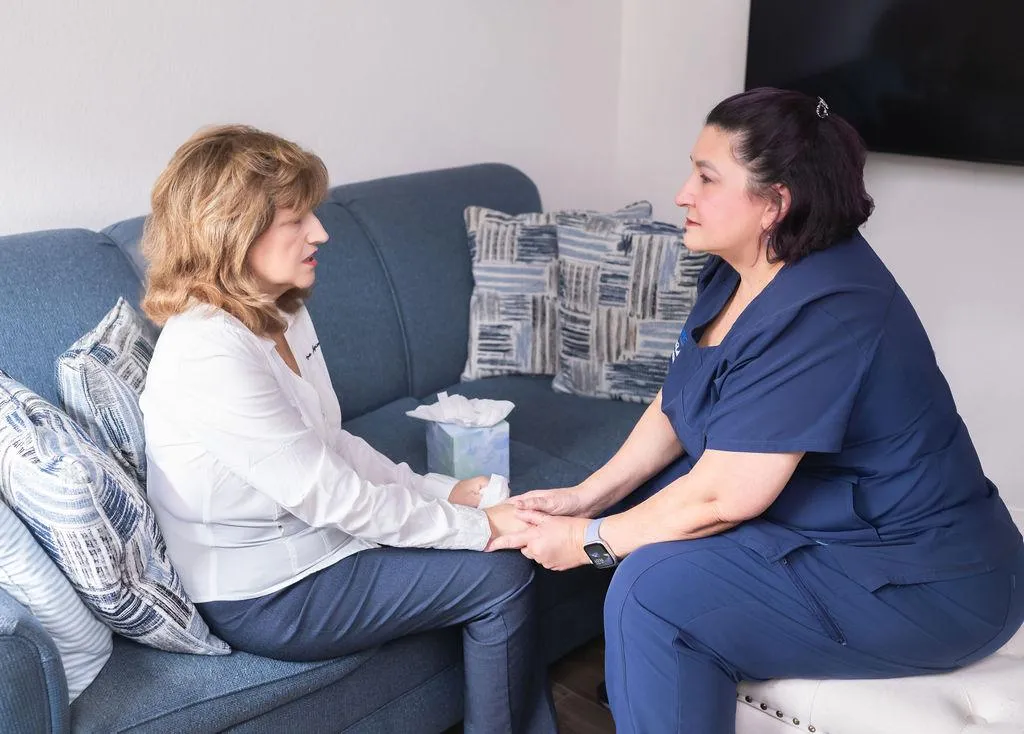
Find one person outside the situation to whom you can say how you are really doing, which has nothing to do with the medical details and everything to do with the honest state of your own tank, so that your loved one can recieve steady care from someone who is still standing. It also helps to learn the difference between fatigue, which is normal and manageable, and a crisis in which you cannot make decisions or look after yourself, because the second one calls for outside help, and hospital social workers and caregiver support programs exist for exactly that reason.
When to Bring In a Professional Patient Advocate
There comes a point in many caregiving stories where preparation is not enough on its own, usually because the situation has become too fast, too fragmented, or too high in stakes for one tired family member to manage.

Conflicting recommendations from several specialists, a discharge plan that does not match what the home can actually support, an insurance denial that has already survived an internal appeal, and a quiet sense that something is wrong that nobody will take seriously are all signs that it may be time for another set of experienced eyes.
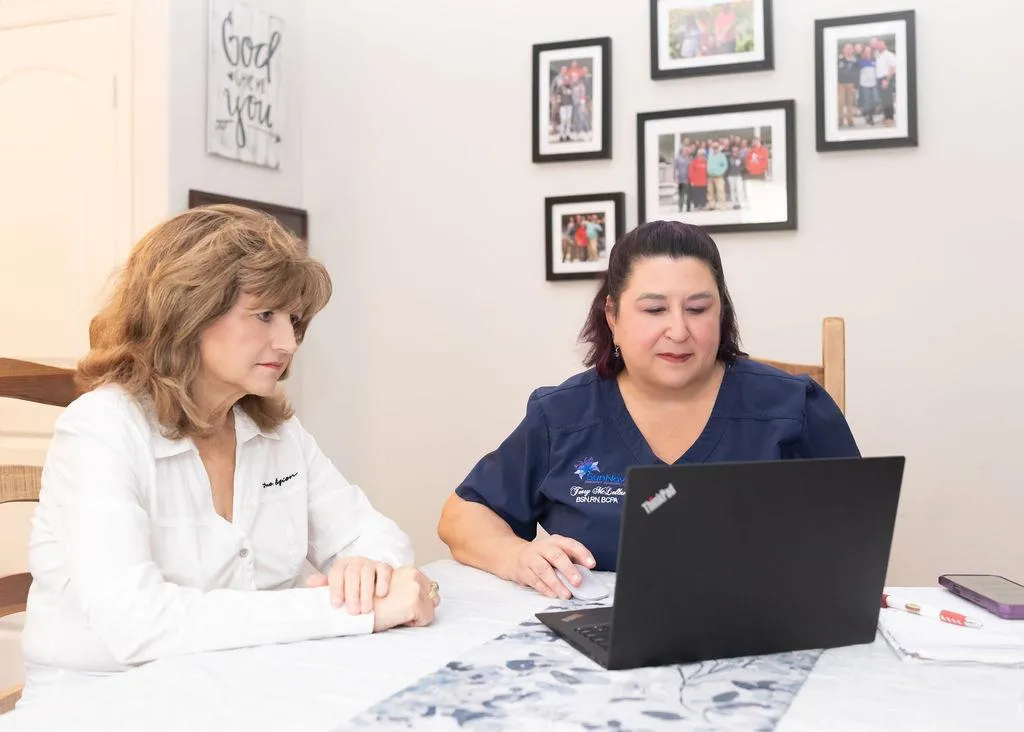
SunNav Healthcare Advocates was founded by Terry McLellan, a registered nurse and board-certified patient advocate with more than twenty years of healthcare experience, and it has grown into a team of experienced advocates who work with families in person in the Dallas area and remotely wherever you happen to live.
Every advocate on the team works for the patient and the family, and not for the hospital or the insurer, so there is no competing interest in the room. We can attend care meetings, review treatment plans, manage insurance appeals, and sit beside you during a discharge conversation that does not feel right.
You can begin with a free thirty-minute consultation at sunnavhca.com/appointment, or use Advocate on Demand when you need immediate, short-term support in the middle of a crisis. You were not meant to do this alone, and you do not have to.

Disclaimer: We do not provide legal or financial advice. For such matters, please consult with a licensed professional. Referrals are available upon request but do not constitute an endorsement.
Note: We have been approved to bill Traditional Medicare as of 6/16/2025