Struggling in a healthcare crisis? Click here now →







What to Do After a Breast Cancer Diagnosis: How to Advocate for Yourself and When to Ask for Help
What to Do After a Breast Cancer Diagnosis: How to Advocate for Yourself and When to Ask for Help
If you have just heard the words breast cancer, you are probably reading this with a head full of noise, a phone full of unanswered messages, and a sense that the ground moved under you somewhere between the call and the end of the day.
Nothing in this article is meant to rush you or add to the pile.
It is meant to give you a few steady things to hold, in the order they tend to be most useful, so that you can take part in decisions about your own care with a little more clarity than you might feel right now.
October is Breast Cancer Awareness Month, and at SunNav Healthcare Advocates we think the most useful kind of awareness is the practical kind, the sort that tells a newly diagnosed person what to do on Tuesday morning.

Give Yourself Permission to Slow Down Without Falling Behind
The first days after a diagnosis tend to feel as though everything has to be decided immediately, with appointments, scans, and referrals arriving faster than you can absorb them.
In many cases there is time to gather information and ask questions before treatment begins, although how much time depends on the type and stage of the cancer, so it is worth asking your doctor plainly what a reasonable timeline looks like and what, if anything, would change if you took a few days to think.
Being thorough is not the same as being slow, and no good provider will object to a patient who wants to understand the plan before agreeing to it.
Gather Everything in One Place Before You Try to Make Sense of It
Start by collecting every piece of paper and every portal message connected to your diagnosis, from imaging reports and biopsy results to appointment summaries and insurance letters, and put them together in a folder or a box without trying to organize them yet.
Then take ten minutes to write down what you currently understand in your own words, and on a separate page write down everything you do not understand, including terms that were used but not explained and decisions that seemed to be made before you were asked.
That second page is not a record of anything you missed, it is the agenda for every conversation that follows, and the goal is to leave each appointment with fewer unanswered items than you walked in with.
Ask for your own copy of the pathology report and the imaging reports, since they are yours to have, and ask where the actual images are stored in case you want another team to look at them later.
If you are told the information will be shared between offices, it is still worth holding your own copy, because records do get lost and portals do go down at inconvenient moments.
Learn the Words on Your Pathology Report
The pathology report shapes much of what comes next, and it is written in language never meant for the person it describes. You don't need to become a pathologist, but it helps to understand a handful of terms and ask your doctor to explain each one as it applies to you.
The type of cancer, such as whether it is invasive or noninvasive, tells you where the cells are and how they are behaving.
The grade describes how different the cancer cells look from normal cells, and the stage describes how far the cancer has spread, if at all.
Hormone receptor status, which is a report on whether the cancer cells respond to estrogen or progesterone, and HER2 status, which is a report on a particular protein on the cancer cells, both help determine which treatments are likely to be recommended.
When you meet with your team, ask them to walk through your report line by line and explain what each finding means for your options.
If something on the report does not match what you were told in conversation, ask about it right away and ask for the difference to be explained in writing.
Questions Worth Bringing to Every Appointment
At SunNav we teach five questions that apply to any significant medical conversation, and they fit a breast cancer diagnosis particularly well.
Ask what exactly is being treated and what that means for your body in everyday terms,
Ask what your options are, including the ones the team is not recommending and why,
Ask what the risks are, along with what success and failure would each look like.
Ask what happens if you wait, and what the decision is that cannot be undone, and finally
Ask what specific symptoms or changes should make you call the office, so that you are not left guessing between a normal side effect and something urgent.
You may also want to ask who will be coordinating all the pieces, since breast cancer care often involves a surgeon, a medical oncologist, a radiation oncologist, and sometimes a plastic surgeon, and these people do not always speak to each other as much as patients assume.
Many breast centers have a nurse navigator who helps with scheduling, questions, and connecting the dots, so it is entirely reasonable to ask whether one is available to you and how to reach that person.
A Second Opinion Is Ordinary, and You Do Not Need to Apologize for One
Many people hesitate to seek a second opinion because they worry it will offend their doctor or delay care, and both worries are far more common than they are justified.

Second opinions are a normal part of cancer care, and a team that is confident in its plan will usually support one.
It can be as simple as saying, "I would like to get a second opinion before we proceed, can you help me with the referral or should I arrange that myself?"
Many cancer centers review complicated cases in a multidisciplinary tumor board, where specialists discuss a case together, and it is fair to ask whether your case will be presented to one.
When you pursue a second opinion, you will need your pathology report, your imaging reports, and often the images themselves, which is another reason to have collected your records early.
Ask Early About Genetic Counseling and Fertility
Two topics deserve to be raised before treatment begins, because they can affect the choices in front of you and are easy to overlook in the rush.
The first is genetic counseling, since results from genetic testing can sometimes influence decisions about surgery and can also matter for family members, so it is worth asking whether you are a candidate.
The second, for anyone who may want to have children in the future, is fertility preservation, which generally needs to be discussed before treatment starts and not after. If neither topic has come up, it is perfectly reasonable to bring them up yourself.
Keep an Eye on Insurance and Costs From the Beginning
Cancer care involves a great deal of authorization, with imaging, genomic tests, procedures, and medications often requiring prior approval from the insurer.
Before a scheduled test or treatment, ask the office whether prior authorization is needed, whether it has been submitted and approved, and what the authorization number is, and keep that number in writing. Keep a log of every call to your insurance company, including the date, the representative's name, the reference number, and what was promised, since disputes are decided by documentation.
If a denial arrives, it is a first position and not the end of the road, and the first step is to ask for the specific reason in writing.
A federal law, the Women's Health and Cancer Rights Act, generally requires group health plans that cover mastectomy to also cover reconstruction, and it is worth knowing that if you are weighing that option.
If you have Medicare, ask your doctor's office whether principal illness navigation might be available to you, as cancer is among the conditions that can qualify.
And if cost is weighing on you, ask the hospital's financial counselor about assistance programs, and ask about manufacturer programs for medications, since these exist more often than people are told and are almost never offered without being asked.
Bring Someone With You, and Take Care of Yourself Too
Medical appointments are hard to absorb alone, so bring a friend or family member who can take notes and ask the question you forget, and ask your doctor whether it is acceptable to record the conversation on your phone.
Write down the plan before you leave the parking lot, while it is still fresh. If someone close to you is helping, a HIPAA authorization lets the care team speak with them, and a healthcare proxy and advance directive are worth completing while you are well enough to think them through.
Beyond the paperwork, find at least one person to whom you can say honestly how you are doing, and accept the offers of help that people make, preferably by giving them something specific, like a ride on Thursday or a meal on Tuesday. Organizations such as the American Cancer Society and Susan G. Komen also offer information and support lines, and hospital social workers are there for exactly this reason.
When It Is Time to Call in Someone With Experience
Everything above can be done on your own, and plenty of people do it well.
Still, there is a difference between being capable of something and having to do it alone while you are frightened, tired, and trying to keep life going.

If your care team is giving you conflicting advice, if you are not sure the plan fits your situation, if an insurance denial has you stuck, or if you simply feel that you need someone beside you who understands how this system works, reaching out for help is understandable and something we strongly encourage. You do not have to be alone in this.
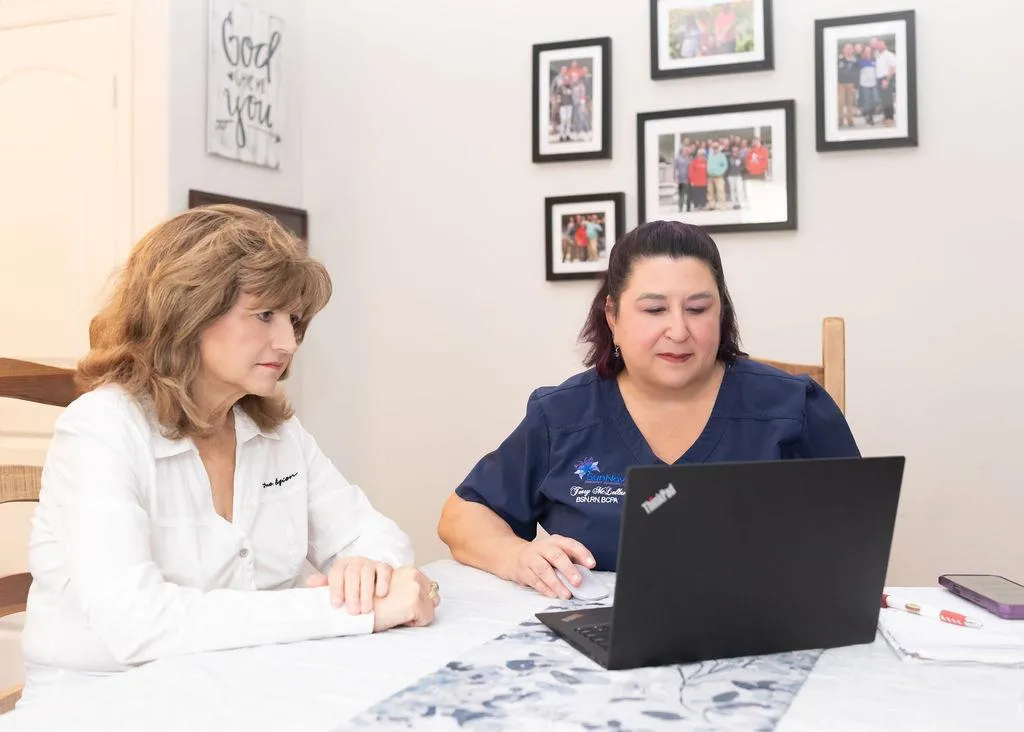
SunNav Healthcare Advocates was founded by Terry McLellan, a registered nurse and board-certified patient advocate with more than twenty years of healthcare experience, and it has grown into a team of experienced advocates who walk with people in person in the Dallas area and by phone and video wherever they live.
At the very least, we offer a free thirty minute consultation where we listen, talk through where you are, and tell you honestly how we can help or where to point you for the best care in this incredibly hard time. There is no pressure and no obligation, and if we are not the right fit we will tell you so. You can schedule that conversation at sunnavhca.com/appointment, and we will be glad to hear from you at your own apointment pace.
This article is for general education and is not medical advice. Please talk with your own care team about decisions specific to your diagnosis.

Disclaimer: We do not provide legal or financial advice. For such matters, please consult with a licensed professional. Referrals are available upon request but do not constitute an endorsement.
Note: We have been approved to bill Traditional Medicare as of 6/16/2025